Marketing Agency in Noida Growth Small Businesses March 2026
Marketing Agency in Noida
Performance marketing is rapidly advancing with the adoption of smarter technologies and evolving platforms. In 2026, success will depend on adaptive, data-focused strategies rather than traditional methods. With AI, automation, and predictive analytics driving personalization and smarter audience targeting, brands must also navigate tighter privacy rules and reduced third-party data access. Businesses that embrace first-party data, AI-optimized platforms, and performance-driven decision making will achieve sustainable and measurable growth in an AI-powered ecosystem. Marketing Agency in Noida
Understanding Performance Marketing Strategy
Key Performance Marketing Challenges Brands Faced in 2025
- Content overload and AI-driven clutter
- Increasing ad spend and ROI challenges
- Constant shifts in algorithms and AI-led search
- Growth of voice, visual, and conversational search
- Ethical Branding, Trust & Market Credibility
- Evolving Discovery Trends & Search Intent
Impact of These Challenges on Performance Marketing Approaches
Performance Marketing Priorities for 2026
- Privacy-first strategies and first-party data focus
- High-quality, value-driven content in an AI ecosystem
- ROI-focused advertising and smarter media planning
- Agile response to algorithm and AI search updates
- Voice, visual, and multi-format search optimization
- Visibility across AI search and answer-based platforms
- Building brand trust, authority, and credibility
- Authentic, purpose-led brand communication
- Advanced ROI tracking and experience optimization
- Managing online reputation and brand perception
- Expanding presence on emerging platforms and communities
- Tracking intent signals and evolving user behavior
Why Your Business Needs a Custom Performance Marketing Strategy Final Thoughts
What is a Performance Marketing Strategy?
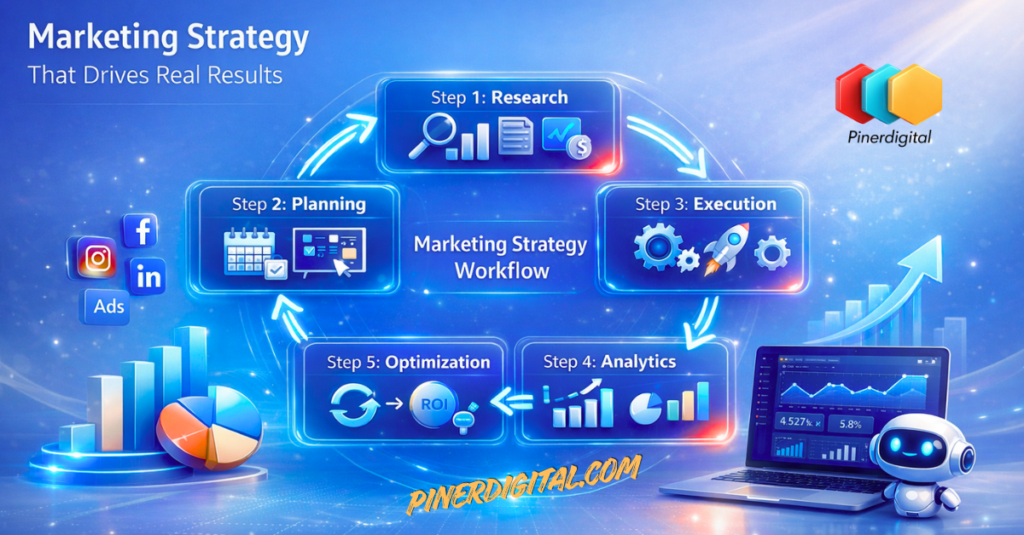
A performance marketing strategy is a goal-driven approach designed to achieve measurable business outcomes through online channels. It combines data analysis, paid media, content, search visibility, and audience targeting to drive real results.
Instead of using generic tactics, it focuses on selecting the right platforms, understanding audience behavior, and optimizing campaigns based on performance insights. With the right planning and execution, a customized performance marketing strategy helps businesses achieve scalable, consistent, and ROI-focused growth.
Key Performance Marketing Challenges in 2025
In 2025, performance marketers faced growing complexity as technology, platforms, and audience behavior continued to shift. While AI became a core part of campaign execution, many businesses struggled with effective adoption and optimization.
At the same time, audiences placed greater importance on privacy, trust, and brand purpose. This pushed brands to rethink data usage, communication strategies, and value delivery. Succeeding in an AI-driven, mobile-first environment required agility, innovation, and transparent, trust-focused performance campaigns across industries.
-
Content Overload & AI-Driven Clutter
In 2025, the surge of AI-created content made online spaces extremely crowded. While content creation became faster, capturing attention became more challenging. Success depended on delivering authentic, high-value content backed by real expertise, not volume. Brands had to prioritize relevance, clarity, and consistency to rise above automated noise.
- Increasing ad spend and ROI challenges
In 2025, increasing competition pushed ad costs higher across major platforms. Marketers had to focus on smarter targeting, creative optimization, and budget efficiency to protect ROI and profitability.
- Constant shifts in algorithms and AI-led search
Search engines and social platforms evolved rapidly with AI-driven updates. Maintaining visibility required continuous SEO refinement, intent-focused content, and agile distribution strategies.
-
Growth of Voice, Visual & Conversational Search
Users increasingly searched through voice assistants, images, and AI conversations. Brands needed to optimize for natural language, long-tail intent, and rich visual content beyond traditional keywords.
- Ethical Branding, Trust & Market Credibility
Audiences expected genuine transparency and ethical practices. Brands that communicated real impact with authenticity built stronger trust, while generic claims lost credibility.
- Evolving Discovery Trends & Search Intent
AI-driven search experiences reshaped how people discover content. Marketers shifted from static keywords to intent-based optimization and frequent content updates to stay relevant.
Performance Marketing Focus Areas for 2026
In 2026, performance marketing success will depend on moving beyond traditional channel planning and embracing AI-led discovery, increased competition, and evolving audience behavior. To stay ahead, brands must prioritize data-driven adaptability, smarter targeting, and measurable outcomes.
Below are the key focus areas for performance marketers.
- Privacy-first strategies and first-party data focus
In 2026, privacy-led performance marketing is essential as data regulations become stricter and user awareness grows. Brands must follow compliant, consent-based data practices not only to meet legal standards but also to earn audience trust.
With third-party cookies fading out, first-party data has become the foundation of sustainable growth. Transparent data collection, ethical usage, and clear communication help deliver personalized experiences without compromising privacy. Businesses that prioritize trust-driven data strategies improve engagement, visibility, and long-term performance in an AI-driven ecosystem.
- High-quality, value-driven content in an AI ecosystem
In 2026, standing out in an AI-saturated environment depends on content quality, not volume. Brands must focus on original ideas, real expertise, and meaningful insights to earn attention across search, social, and AI-powered platforms.
Creating content that genuinely educates and solves user needs builds authority, trust, and long-term visibility. A quality-first content approach helps businesses position themselves as credible and reliable voices in an increasingly automated ecosystem.
- Agile Response to Algorithm and AI Search Updates
In 2026, frequent algorithm changes and the rise of AI-powered search require marketers to stay flexible and responsive. Rather than increasing ad budgets, brands must quickly adapt their strategies by refining audience targeting, updating creatives, and optimizing landing pages to align with evolving search and platform algorithms.
An agile approach relies on continuous testing, real-time data analysis, and fast optimization across channels. By focusing on measurable signals such as visibility, engagement, and conversions, businesses can maintain performance, reduce inefficiencies, and stay competitive in a rapidly changing digital environment.
- Voice, visual, and multi-format search optimization
In 2026, AI-driven search goes beyond text, with voice queries, image search, and multimedia content shaping online visibility. Search performance now depends on how well content matches natural language queries, visual intent, and diverse content formats.
To remain discoverable, marketers must optimize for voice-friendly keywords, visual search signals, and multi-format content such as videos and images. A data-led, flexible approach helps brands improve AI search visibility and achieve sustainable digital growth.
- Visibility across AI search and answer-based platforms
Online discovery goes in 2026 beyond text as users increasingly search through voice commands, images, and mixed media inputs. Brands must adapt by aligning content with conversational queries, visual intent, and AI-driven search behaviors.
Optimizing for voice-friendly language, intent-based keywords, and high-quality visuals helps ensure visibility across voice assistants, image search, and multimodal AI platforms, keeping brands relevant in a rapidly evolving search landscape.
- Visibility Across AI Search and Answer-Based Platforms
In 2026 AI-powered search and answer platforms strongly influence how users discover information and brands. Visibility now depends on how well a brand appears within AI-generated answers, summaries, and recommendations.
Creating clear, structured, and authoritative content helps AI systems understand and surface your brand across these platforms. This improves discoverability, strengthens trust, and ensures consistent presence in an AI-driven digital environment.
- Building brand trust, authority, and credibility
Strong brand authority is essential for both user trust and visibility across in 2026 for AI-driven platforms. Search engines and AI systems now prioritize brands that consistently demonstrate expertise, reliability, and authenticity.
Building credibility through high-quality content, trusted brand mentions, and genuine customer reviews helps strengthen trust signals. This approach improves discoverability, boosts brand confidence, and supports long-term digital growth.
- Authentic, purpose-led brand communication
In 2026, audiences connect with brands that demonstrate real values through actions, not just messaging. Purpose-driven branding requires honesty, transparency, and consistency across all brand interactions.
Clear storytelling and authentic communication help build emotional trust and long-term loyalty. When a brand’s purpose is reflected in its content and behavior, it strengthens credibility and stands out in a competitive digital space.
- Advanced ROI tracking and experience optimization
In 2026, accurate ROI measurement requires a complete view of how users interact across channels and touchpoints. Knowing what truly drives value helps brands make smarter marketing decisions.
By combining advanced attribution with optimized user experiences, marketers can minimize friction, increase conversions, and achieve consistent, measurable returns from their digital efforts.
Managing online reputation and brand perception
In 2026, a brand’s online reputation strongly impacts customer trust and visibility across digital platforms. Reviews, feedback, and brand discussions shape how both users and AI systems perceive a business.
Actively monitoring conversations, responding to reviews, and engaging with audiences helps maintain credibility and positive brand perception. Strong reputation management supports trust, visibility, and sustainable digital growth.
Expanding presence on emerging platforms and communities
In 2026, audiences discover brands across multiple platforms, including online communities, AI-powered tools, and short-form video channels. Spaces like community forums, AI search platforms, and video-first networks now play a key role in brand discovery.
To remain relevant, brands must engage where their audience is active, contribute value within communities, and create engaging short-form content. A strong presence across emerging platforms builds trust, visibility, and long-term growth.
Tracking intent signals and evolving user behavior
In 2026, search intent is evolving as users rely more on AI answers and instant results. Traditional keywords alone no longer reflect how people discover information.
By tracking search trends and user behavior, brands can align content with real intent and decision patterns. This improves relevance, visibility, and engagement in a changing digital search landscape.
Why Your Business Needs a Customized Performance Marketing Strategy
Every business has different goals, audiences, and growth challenges, which makes a personalized performance marketing strategy essential. A tailored approach aligns campaigns with your objectives, budget, and target users while focusing on measurable outcomes.
By prioritizing high-performing channels, data-driven decisions, and clear performance metrics, businesses can maximize ROI and reduce wasted spend. Unlike generic solutions, a customized performance marketing strategy ensures resources are invested where they deliver the strongest results.
Conclusion
In 2026, a strong digital strategy requires more than individual tactics—it demands a performance-focused, AI-ready, and user-centric approach. Brands that combine data-driven insights, quality content, and adaptive marketing are better positioned for long-term success.
At Piner Digital, we help businesses grow through customized performance marketing strategies that deliver measurable results. From SEO and AI search optimization to paid media and brand growth, our solutions are built to align with your goals and drive sustainable impact.
Achieve More with Pinerdigital?
Take your next step with a free All Marketing Services And Audit and Consultation with All industry Experts.

Related Posts